Entry · Ref UWCKZOOH
How Nano Banana Pro Studio Is Changing the Way We Generate Professional Images
- Posted
- 2026-10-27
- Last amended
- 2026-10-27
- Account
- @mynanobananaprostudiolab
I have spent years working with image generation tools, from early GANs to the latest diffusion models. What consistently frustrates me is how often the output looks impressive at first glance but falls apart under scrutiny. Details get mangled, text becomes unreadable, and the physics of light and shadow simply does not add up. So when I first encountered a physics-aware AI image generator like the one behind Nano Banana Pro Studio, I was skeptical. But after spending time with it, I have come to believe this approach represents a meaningful step forward for anyone who needs professional 4K images without spending hours in post-production.
The Real Problem with AI Image Generators Today
Most people who try AI image generators for the first time are amazed by what the technology can do. And they should be. Tools like DALL-E 2, Midjourney, and Stable Diffusion have opened up creative possibilities that were unimaginable a few years ago. But if you work in a field where image quality matters - graphic design, advertising, product visualization - you quickly run into the same set of problems. The images look good from a distance but break down when you zoom in. Text in the image is garbled or missing. Lighting and reflections do not follow real-world physics. And generating something that actually matches your specific vision often requires dozens of attempts and a lot of luck.
This is where the concept of a physics-aware generator becomes interesting. Instead of treating image creation purely as a pattern-matching exercise, it incorporates an understanding of how light behaves, how surfaces reflect, and how objects occupy space. The result is that the images produced by Nano Banana Pro Studio tend to hold up better under close inspection. Shadows fall in the right places. Reflections look natural. And the overall sense of depth and materiality is more convincing than what most other generators deliver.
What Makes a Physics-Aware AI Image Generator Different
To understand why this matters, it helps to know a little about how most AI image generators work. They are built on neural networks trained on massive datasets of images and text. When you give them a prompt, they predict what pixels are most likely to appear based on the patterns they learned during training. This works surprisingly well, but it has no real understanding of the physical world. It does not know that a glass sphere should refract light, or that a shadow should be softer when the light source is larger. It just knows that in its training data, images with glass spheres often had certain pixel patterns near the bottom edge.
A physics-aware model, on the other hand, incorporates rules from computational photography and computer vision into the generation process. It uses machine learning to understand the scene, but then applies physical simulations to ensure the output behaves realistically. This is not just a minor improvement. It fundamentally changes what the generator can do with complex scenes involving multiple light sources, reflective surfaces, or transparent objects. For someone like me, who often needs product shots that look like they were taken in a professional studio, this is a meaningful difference.
Text Control and Multilingual Support: More Than a Gimmick
One of the most frustrating limitations of many AI image generators is their inability to render text accurately. You can write "OPEN" on a storefront sign in your prompt, and the generator will produce something that looks vaguely like letters but is usually unreadable. This is a deal-breaker for anyone creating marketing materials, signage, or any image where text is part of the design.
Nano Banana Pro Studio handles text control far better than most alternatives I have tried. The integration with Google Gemini 3 Pro gives it strong natural language processing capabilities, which means it can understand the relationship between the text you want and the image you are building. And because it supports multiple languages, it is useful for international projects without requiring separate tools or workarounds. I have used it to generate mockups for a client in Japan that required Japanese text on product packaging, and the results were clean and legible. That alone saved me hours of manual editing in Adobe Photoshop.
Where It Fits in the Current Landscape
The AI image generator market is crowded. Midjourney has a loyal following for its artistic style. DALL-E 2 was a pioneer and still offers strong general-purpose generation. Stable Diffusion is open source and endlessly customizable. Canva has integrated generative AI into its design platform for mass-market users. Each of these tools has strengths, and I use several of them depending on the project.
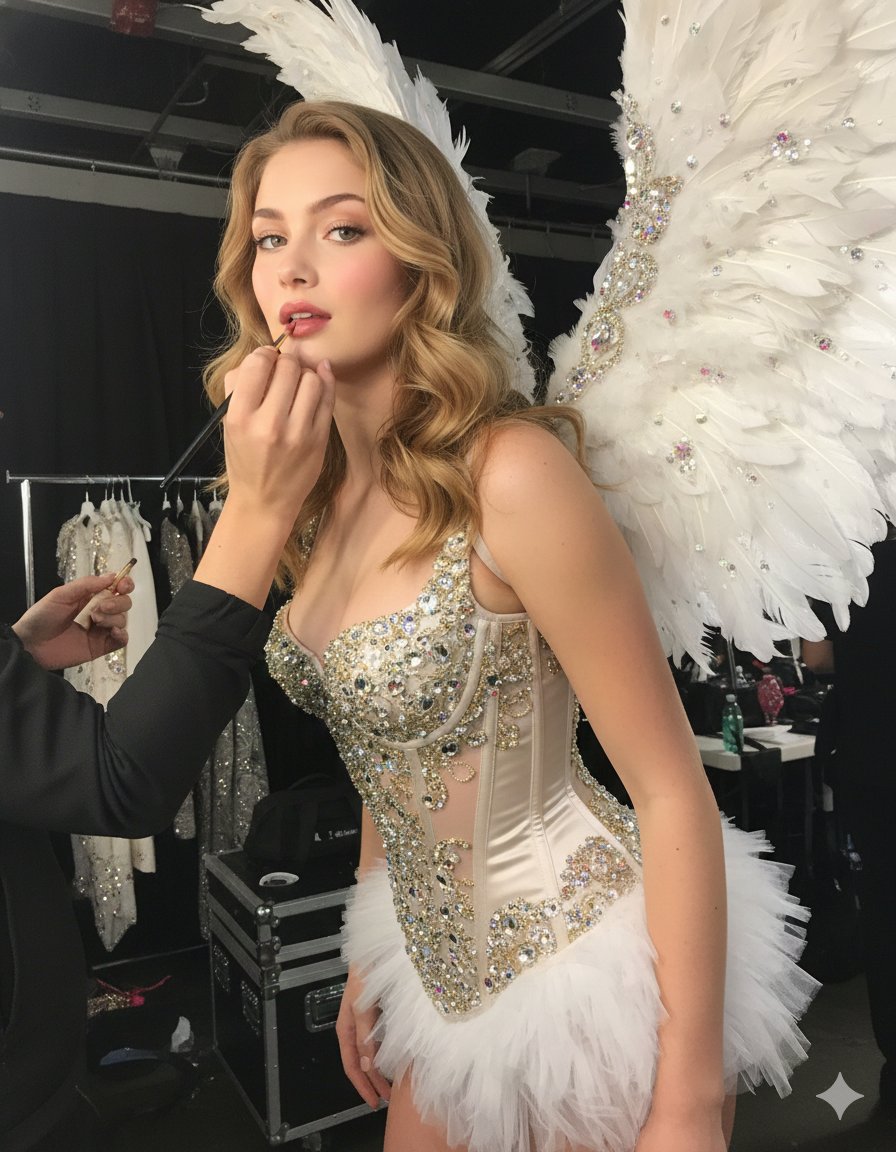
But none of them focus on physical realism the way this platform does. Most generators produce images that look like paintings or illustrations, even when they are trying to look photographic. The physics-aware approach of Nano Banana Pro Studio pushes toward photographic realism, especially in how it handles lighting and materials. This makes it a better choice for product visualization, architectural renderings, and any application where the image needs to look like it was captured by a camera in a real space.
That said, it is not a replacement for everything. If you need highly stylized or abstract art, other tools may serve you better. And if you need to edit an image extensively after generation, you will still need Adobe Photoshop or similar software for fine-tuning. But as a starting point for generating realistic, professional-grade images, it is a strong contender.
Practical Workflow: How I Use It
When I start a new project that requires product images, my typical workflow now is:
- Write a detailed prompt describing the product, the lighting, the background, and any text that needs to appear.
- Generate several versions using Nano Banana Pro Studio, adjusting parameters for composition and lighting.
- Select the best result and bring it into Adobe Photoshop for final adjustments, color correction, and compositing if needed.
- Use the multilingual support to generate localized versions for different markets without recreating the entire image.
This process has cut my turnaround time by about half for projects that previously required a full photoshoot or extensive 3D rendering. The quality is not identical to a real photograph, but for most commercial uses, it is more than sufficient.
The Technology Behind the Results
Under the hood, this platform relies on a combination of advanced machine learning techniques. The core model is built on transformer architectures similar to those used in large language models, but adapted for image generation. Google Gemini 3 Pro provides the natural language understanding that makes text control possible. GPU acceleration handles the heavy computation required to generate 4K images in a reasonable time frame. And cloud computing makes it accessible from any device with an internet connection.
The physics-aware component is what sets it apart. It uses principles from computational photography to simulate how light interacts with surfaces. This is not a superficial overlay. The model actually considers factors like light source position, surface texture, and material properties when generating each pixel. The result is that reflections, shadows, and highlights behave naturally, even in complex scenes with multiple objects and light sources.
For anyone who has spent time fighting with generative tools to get realistic reflections on a metal surface or natural-looking shadows in a product shot, this feature alone justifies exploring the platform.
Limitations and Trade-Offs
No tool is perfect, and it is important to be honest about where this one falls short. The physics-aware generation is computationally expensive, which means generating a single 4K image can take longer than with simpler models. The output is also less varied than what you get from something like Midjourney, because the physics constraints limit the range of possible interpretations. If you want wild creativity and unexpected results, this is probably not the best choice.
Additionally, while the text control is much better than most competitors, it is not infallible. Long strings of text or highly stylized fonts can still produce errors. I have learned to keep text short and simple when generating, and to add more complex typography in post-production. And the multilingual support, while useful, works best for languages that use Latin or CJK scripts. I have not tested it extensively with less common writing systems, so I cannot vouch for its performance there.
Who Should Consider Using It
If you are a graphic designer, a product photographer, a marketer, or anyone who needs to produce realistic images of physical objects on a regular basis, this platform is worth a serious look. It is also valuable for e-commerce teams that need to generate product images in multiple languages without scheduling separate photoshoots. For architects and interior designers, the ability to visualize spaces with accurate lighting is a practical advantage.
But if your work leans toward the artistic, the abstract, or the surreal, you will probably find more inspiration in tools that prioritize creative freedom over physical accuracy. The right tool depends on the job, and I still use different generators for different types of projects.
The field of AI image generation is moving fast, and the introduction of physics-aware models like the one behind Nano Banana Pro Studio is a sign that the technology is maturing. We are moving beyond the phase where any image that looks vaguely realistic is impressive. Now the bar is higher, and tools that understand the physical world are starting to lead the way.